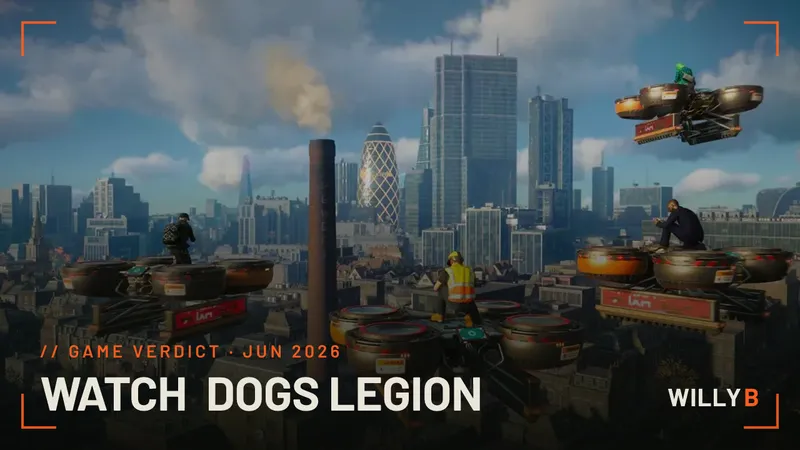
Watch Dogs Legion is worth it on a sale in 2026, which is a qualified yes for a game built almost entirely around one clever gimmick years after launch, and I am calling it a 3.5 because the score and the reason belong in the same breath. The play-as-anyone hook is genuinely novel, the map is one of the better open-world cities going, and there is a lot to do, while it is also uneven and narratively thin, and the central idea works better as a toy than as a story engine. Buy it on a sale and you will get your money’s worth, and pay full whack and you might raise an eyebrow, which is the verdict I would give a mate before I started describing boroughs.
London under the boot, which is the part that holds
Legion drops you into a near-future London under an authoritarian boot, with surveillance everywhere and a private security firm running the streets, and you are the hacker collective DedSec, whose job is to push back. The setting is the strongest thing here, because London is recreated with real landmarks, recognisable boroughs and a grimy, drone-filled mood that fits the story it is trying to tell. Wandering it on foot or by car is a pleasure in itself, and it is one of the more characterful open-world cities I have spent time in, which is a compliment I would still pay on a night when the mission in front of me is doing nothing useful.
The roster, which is where the toy actually works
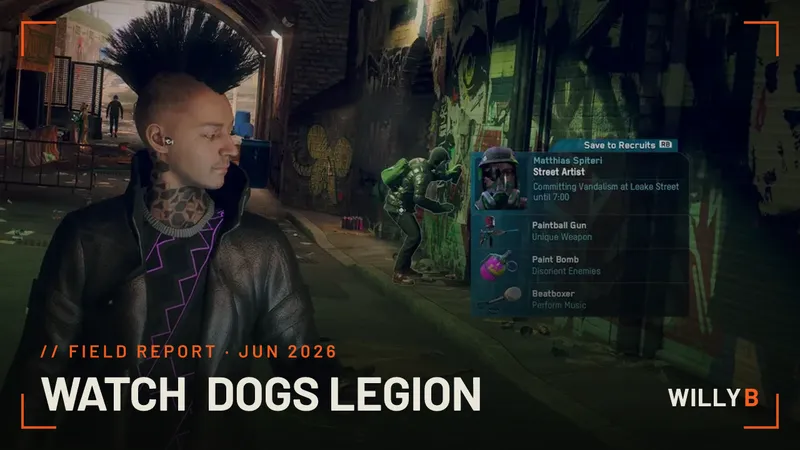
The play-as-anyone system is the headline, and it does deliver, because you can recruit almost any non-player character you see, each with their own kit, jobs and quirks, then swap to them at will, which turns the city into a roster. I lean into the silliness of it, and that is where the game opens up, since recruiting a member of the police force and then taking the nicest car in the city for a spin is exactly the kind of nonsense the systems are built to enable. I went down that road in recruiting police in the best car in Watch Dogs Legion, and the clip argues the point better than a mission brief ever has. Beyond the gimmick, the hacking sandbox is solid, so you can take a mission stealthily through cameras and gadgets without ever stepping inside, or you can go loud, and the freedom to approach an objective however you fancy is the Ubisoft open-world formula at its more relaxed end. It suits a solo player who likes to experiment rather than follow a strict route, which is the only way I have enjoyed this particular map for any length of time.
Where the clever idea hollows the story out
Because every character is procedurally assembled, almost none of them carry real weight, and the writing is functional at best, so the main cast never grips you the way a hand-built protagonist would. The play-as-anyone idea, clever as it is, hollows out the storytelling rather than enriching it, while mission design is repetitive, the difficulty is soft, and the world reacts to your chaos less than you would hope. It is wide, and it is not deep, which is the honest shape of the thing and also exactly where the 3.5 comes from, since the premise keeps promising a story the roster cannot hold.
How I play it, which is mostly by ignoring the briefing
I play this solo, in free-roam, and I treat it as a chaos sandbox more than a campaign, because the fun is in the emergent moments, building an absurd roster, testing how far the systems bend, and seeing what happens when you stop respecting the mission markers entirely. The play-as-anyone chaos is the whole point, and I let it run wild in play as anyone chaos in Watch Dogs Legion, which is the session I would send you if the trailers sold you a serious resistance drama. If you come at Legion the way those trailers wanted you to, you will be let down, and if you come at it as a toybox in a beautifully rendered London, it clicks, which is the difference between the premise and the evening I actually have.
Who should buy the sale, and who should walk past it
This is for the player who likes open-world games for the world and the systems, not the story, so if you want a city to mess about in, a hacking sandbox to break, and a steady drip of solo objectives to chew through, Legion fits. If you need a strong narrative and characters you can care about, look elsewhere, because that is precisely the thing this design trades away, and recruiting with more conviction will not put it back.
Watch Dogs Legion is worth it in 2026, on a sale, for the right player, because it is a generous, good-looking, genuinely inventive open-world game that never quite reaches the heights its premise promised. A fair 3.5 sits more than the sum of its flaws and less than the sum of its ideas, and the full state of the game, plus where it sits in my rotation, is logged on the Watch Dogs Legion hub. If you want to see where it ranks against the rest of the solo shelf, the open-world list is the place to browse, and I would start there if the story is the pillar you cannot do without.
FAQ
Is Watch Dogs Legion worth it in 2026?
On a sale, yes, because the play-as-anyone system and the near-future London map carry it, even though the writing and the recruit characters are thin, and that is the qualified yes I am willing to give it years on. Pay full price and you may feel short-changed, which is why I would wait for the discount rather than pretend the premise is doing more work than the evening does.
Do you have to play as multiple characters in Watch Dogs Legion?
No, you can find a recruit or two you like and run the whole campaign with them, though the recruitment system is the main thing the game does differently, so leaning into it is where most of the fun sits. Nothing in the design forces a swap every mission, and the roster is still the toy the city is built around, which is why I mess about with it instead of treating the option as a requirement.
Is Watch Dogs Legion good for solo free-roam?
Yes, it is built as a solo open-world game first, and free-roam is where it shines, because recruiting odd characters, stealing cars and poking at the systems is more entertaining than the story missions. I play it that way on purpose, and the campaign is the part I keep in the background while the city and the roster do the actual work.
What is the setting of Watch Dogs Legion?
A near-future London under an authoritarian boot, with surveillance everywhere and a private security firm running the streets, and you play the hacker collective DedSec, whose job is to push back against that arrangement. The city is the strongest thing here, recreated with real landmarks and a grimy, drone-filled mood, which is why wandering it still works when a mission does not.
What are the weak points of Watch Dogs Legion?
The writing is functional at best and the procedurally assembled characters carry no real weight, so the play-as-anyone idea hollows out the storytelling, which is the trade the clever hook makes and then never quite pays back. Mission design is repetitive and the difficulty is soft, and it is wide without being deep, which is why the score stays where it is.
Who is Watch Dogs Legion for?
The player who likes open-world games for the world and the systems, not the story, which is the audience I am in when I load it, and the city plus the hacking sandbox are the reasons that player gets on. If you need a strong narrative and characters you can care about, look elsewhere, because that is precisely what this design trades away, and recruiting harder will not grow the cast a soul.
More like this
 Watch Dogs: Legion
New Watch Dogs Game? A Legion Remaster, Not WD4
Reports say Ubisoft is reviving Watch Dogs with a Legion director's cut rather than Watch Dogs 4, which according to Tom Henderson means extra content, a night mode and new motion-capture, none of it confirmed by Ubisoft. I am glad the series is not being written off, and I am not pretending a polish-and-expand pass on London is the sequel a lot of us wanted.8 Jun 2026Read Watch Dogs 2
Is Watch Dogs 2 Worth It in 2026? The Free Roam Verdict
Yes, Watch Dogs 2 is absolutely worth it in 2026, and on a sale it is dirt cheap, because the bright playful San Francisco turns hacking into a toy with no forced grind, and I have over 200 videos on the city from long before the price made it fashionable again. The gunplay is the dated part, so I would hand it to you as a stealth and hacking sandbox rather than as a shooter you came to for the rifles.4 Jul 2026ReadNew field reports, to your inbox
No spam. Leave whenever you like.