Some extraction shooters grab you for hundreds of hours, and others get uninstalled inside a weekend, which has very little to do with the graphics or the gun count. It comes down to a handful of design pillars, and once you have names for them you cannot unsee them. A good one makes a quiet, careful run feel just as rewarding as a big fight, and it never forgets the solo player, which is the checklist I carry in after more hours creeping through these worlds than I would like to admit.
The loop that makes a locker feel like a vault
It starts with the risk versus reward loop, which is the beating heart of the whole genre, because you bring your gear in, you loot, and at some point you decide whether to extract with what you have or push deeper for the better stuff. Die, and you lose the lot, so that single loop is what makes a quiet equipment locker feel like a vault you actually care about. If a game gets nothing else right and still nails this tension, it is already halfway home, and if you are new to the language around it, my extraction shooter terms explained guide will save you a lot of confused Googling.
Then there is gear fear, the good kind of stress, that tightening in your chest when you are carrying a kitted-out loadout towards the exit and you hear footsteps you cannot place. A good extraction shooter manufactures that feeling honestly, through real stakes rather than cheap deaths, because the tension should come from the choices you make and not from a bullet you never had a chance to see coming. The difference matters more than the marketing, since one of those evenings teaches you something and the other just takes the kit.
Enemies you can read, and progress that still respects a poor kit
The enemies, human or otherwise, have to be readable and fair, so you can look at a situation, understand what went wrong, and play it better next time. Games like Gray Zone Warfare and Incursion lean into that mil-sim tension, where every contact feels deliberate, and when the AI behaves consistently a lost run stings while still teaching you something. When it does not, you just rage and close the game, which is how I can tell a system is lying to me even before I have the words for the bug.
A satisfying gear and progression system is the next pillar, because you want to feel yourself getting stronger and smarter, unlocking kit and knowledge that makes each run feel earned. Crucially, that progress should not invalidate a careful, low-kit run, and the best of these games make a clean, cautious extraction with modest loot feel as good as a five-kill firefight. That is the design philosophy I respect most, since a game that only claps for the loudest raid has already forgotten why I extracted with less.
Maps with more than one story, and a door a newcomer can use
Map design ties the rest together, because a great map gives you real route choices and multiple extraction points, so two players can run the same location and tell completely different stories. Dead-end corridors and single exits kill that, and you want a space that rewards knowledge, where learning a back route feels like a genuine edge you earned through hours on the ground.
The pillar people forget is accessibility, and the breakout of recent years is the proof, because ARC Raiders won by being welcoming rather than by being the most punishing game in the room. It reportedly crossed sixteen million sales, with half its player base sinking over a hundred hours in, and it did that by respecting newcomers rather than gatekeeping them. Punishing is easy, and inviting people in while keeping the tension is the hard, clever bit, which is why that one sits in my head whenever a new title confuses cruelty with design.
That is the checklist I carry into every new title, a quiet run that pays, a fight that pays, and a solo player who was never an afterthought. If you want one that fits how you actually play, run through my which extraction shooter tool, or have a look at my pick of the best solo PvE extraction shooters to play right now.
FAQ
What makes a good extraction shooter?
The core is the risk versus reward loop, supported by honest gear fear, fair and readable AI, a progression system that does not invalidate a careful low-kit run, good map design and accessibility. If a game nails the tension of leaving with what you have, it is already halfway home, and the other pillars are what stop that feeling turning cheap.
What is gear fear in an extraction shooter?
It is the tension of carrying a kitted-out loadout towards the exit while you hear footsteps you cannot place, and a good game manufactures it through real stakes rather than cheap, unavoidable deaths. The difference matters, because the stress should come from a choice you made, not from a bullet you never had a chance to see coming.
Does an extraction shooter need to be hardcore to be good?
No, it does not need to be hardcore to be good, because ARC Raiders won by being welcoming rather than punishing, and it reportedly crossed sixteen million sales. Inviting people in while keeping the tension is the harder and cleverer goal, and half that player base sinking over a hundred hours in is the bit I keep coming back to.
Why does map design matter in an extraction shooter?
A great map gives you real route choices and multiple extraction points, so two players can run the same location and tell completely different stories. Dead-end corridors and single exits kill that, and a good space rewards the knowledge you earn through hours on the ground, where a back route becomes an edge you actually paid for.
What makes enemy AI good in an extraction shooter?
It has to be readable and fair, so you can look at a situation, understand what went wrong, and play it better next time. When the AI behaves consistently, losing a run teaches you something, and when it does not, you just rage and close the game, which is the difference I feel between a lesson and a sulk.
Should progression make a low-kit run pointless?
No, progression should not make a low-kit run pointless, because the best of these games make a clean, cautious extraction with modest loot feel as good as a five-kill firefight. Progress ought to make you feel stronger and smarter without invalidating the careful run, which is the design philosophy I respect most.
More like this
 Field report
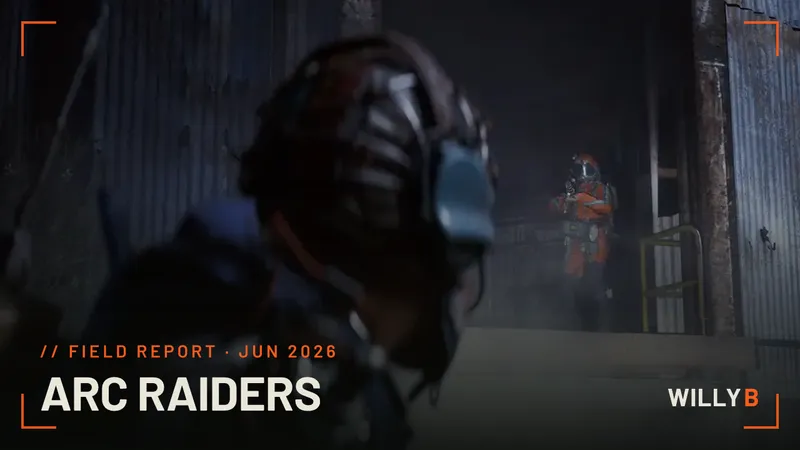
Does Arc Raiders Have a PvE Mode? Solo Play, Explained
Arc Raiders has no dedicated PvE-only mode and no offline single-player, but solo with Fill Squad off is the closest thing to PvE the game has, and the aggression-based matchmaking quietly does the rest if you are willing to play like someone who would rather extract than start a fight.23 Jun 2026Read Field report
The Future of Extraction Shooters: Where the Genre Is Actually Heading
Extraction shooters are heading towards accessibility and PvE, which is the growth engine after a crowded year, and the next winners will be the games that design for that crowd rather than bolting a playlist on once the chart panics.2 Jun 2026ReadNew field reports, to your inbox
No spam. Leave whenever you like.